
On January 20, 2026, the "2026 White Paper on Employment of Chinese Students in the United States," jointly hosted by Manteng Education and New Channel Future Education, was successfully released. Dr. Ma Liewei, founder and CEO of Manteng Education, and Ms. Cui Xue, Director of US Undergraduate Studies at New Channel Future Education, served as keynote speakers. They provided the audience with an in-depth analysis of the latest trends, policy changes, and industry restructuring in the US study and employment environment in 2026, based on the core content of the white paper.
The press conference was simultaneously broadcast live on the Black Horse Doctor video account and the New Channel Future Study Abroad video account, attracting widespread attention and discussion from international students, parents, and education professionals from all over the world.
Authoritative data released: revealing new trends in studying abroad
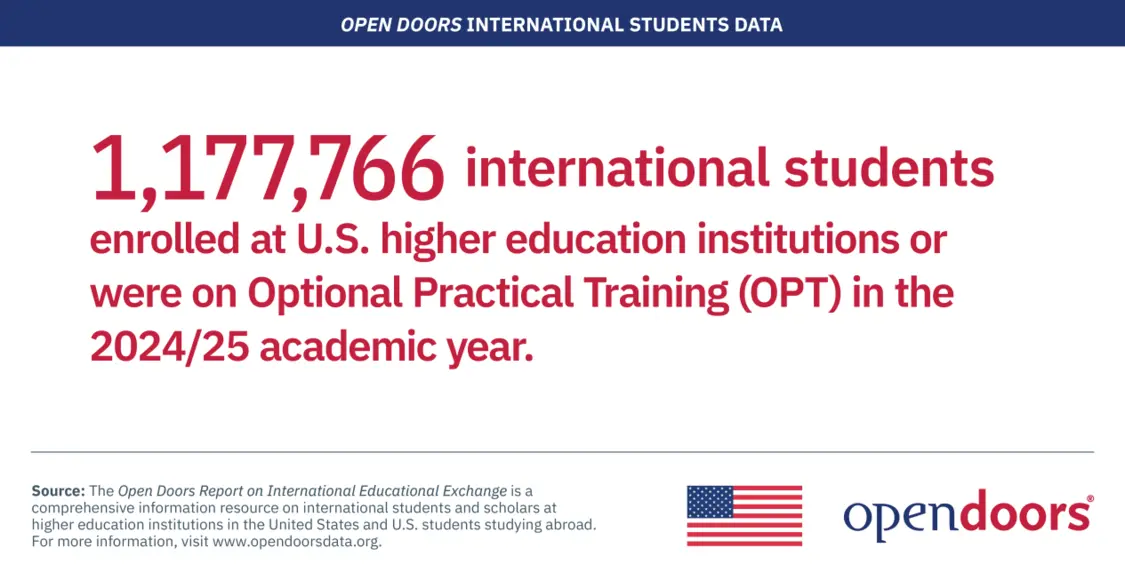
At the beginning of the press conference, Cui Xue, a teacher from New Channel Future Education, systematically interpreted the overall situation of studying in the United States in the 2024/25 academic year, based on the latest "Open Doors Report" released by the Institute of International Education.
Data shows that the total number of international students in US higher education has recovered to 1.177 million, demonstrating the continued attractiveness of the US education system. However, the number of new students enrolled has decreased by 7.2% year-on-year, reflecting a more rational approach to studying abroad. At the same time, STEM and computer-related majors continue to lead the way, accounting for more than a quarter of the total, reflecting both the demand-driven nature of the job market and placing higher demands on students' professional skills and career planning.

Professor Cui Xue specifically pointed out that international students are increasingly valuing a region's employment resources and industrial advantages when choosing a study destination. Report data shows that in the 2024/2025 academic year, California, New York, and Texas were the three most popular states for international students, a ranking that closely aligns with the industrial landscape of the United States.

In-depth trend analysis: Employment becomes the core logic of studying abroad
Dr. Ma from Manteng Education, drawing on his years of experience in the Silicon Valley technology and education sectors, provided an in-depth analysis of the current employment situation and policy changes in the United States, based on the core content of the white paper.
He pointed out that the US job market in 2025 will exhibit a dual characteristic of "slowdown + differentiation": on the one hand, the total number of jobs will continue to grow, but the growth rate will slow down significantly; on the other hand, companies will have stricter selection criteria for talent, especially after the implementation of the "salary-weighted lottery" mechanism for H-1B visas, the competitive advantage of high-salary positions will become more prominent.

The value of a job determines the probability of obtaining a visa and also the starting point of one's career. It is recommended that international students begin with an end-to-end mindset from the moment they enroll, working backward from their target job to develop their skills. Case studies of students from Manteng successfully landing jobs at top companies like TikTok illustrate that systematic and proactive career preparation is key to coping with policy and market uncertainties.
The AI Era Arrives: Job Restructuring and Capability Reshaping
In his presentation on "Job Restructuring in the AI Era," Dr. Ma pointed out that AI has moved from concept to practice and is profoundly changing the way we work. "Future jobs won't be replaced by AI, but by people who know how to use AI." He shared data showing that 88% of companies regularly use AI in their operations, but only 38% have truly achieved large-scale adoption, indicating that "AI implementation capability" has become a new competitive barrier.

Dr. Ma proposed three characteristics of a "good job" in the future: proximity to the core decision-making process, deep collaboration with AI, and the ability to clearly define one's value within the workflow. He suggested that international students should not only master professional skills but also accumulate AI application experience in projects, building a composite competitiveness of "professional ability + AI literacy + business understanding."
New Positioning for Overseas Returnees: Global Competencies, Local Value
In response to the growing trend of overseas students considering returning to China for career development, the press conference also provided a sober analysis. Data shows that the starting salaries for most returnees are concentrated in the 100,000-200,000 yuan range, roughly on par with outstanding domestic graduates. The "halo effect" of overseas returnees is fading. Their main industries are concentrated in internet/technology, finance, and professional services, followed by manufacturing and hard technology sectors, and companies with overseas operations.

Returning overseas students need to transform their "global perspective, language skills, and project experience" gained during their studies abroad into tangible results, especially cases that demonstrate the combination of technological innovation and commercial value. They also need to understand domestic industry policies and recruitment schedules in advance and plan their time accordingly.

Through today's release and exchange, we hope to send a clear message: studying abroad is not the goal; employment is the outcome. The path needs to be upgraded, and planning must begin in advance. Whether studying in the US or returning home, it's essential to make rational judgments and systematic preparations based on real data, industry trends, and your own characteristics.
This white paper launch was not only a sharing of data and trends, but also a profound exchange of values regarding studying abroad and career development. New Channel and Ivy Education will continue to collaborate, leveraging their extensive network of mentors, corporate resources, and technological platforms to provide Chinese students with comprehensive support throughout the entire learning cycle—from planning and application to job seeking and career development—helping each student confidently navigate the global stage and realize their potential.
This article is a user submission and does not represent the views of this website.
The copyright of this content belongs to the original author. Please contact the original author for authorization before reprinting. For any copyright infringement issues, please contact copyright@jaketao.com
