


The 2026 American Football League (NFL) Super Bowl Finals not only witnessed the Seattle Seahawks’ successful revenge and victory, but also witnessed the advertising money-burning war of the AI giants. This overwhelming AI advertising campaign is even more exciting than the competition on the field. Many people call this year’s Super Bowl the “AI Bowl.”
The world's number one business event
The Super Bowl has become an unofficial holiday in the United States, with hundreds of millions of viewers watching each year. This year's audience is expected to exceed 130 million. Based on the population of 340 million in the United States, 40% of Americans will watch this American football finals. Such exaggerated ratings may only be comparable to the Chinese Spring Festival Gala, so the Super Bowl is also nicknamed the "American Spring Festival Gala".
Although the influence of the Super Bowl is currently limited to the North American market, this does not prevent it from becoming the world's most commercially valuable sporting event and an ultimate traffic monetization miracle. The Super Bowl's broadcast rights revenue alone exceeds billion each year. You read that right, the new broadcast contract signed in 2023 lasts for 11 years and totals more than 110 billion US dollars.
Because the copyright fees are so staggering, several major TV giants can only sign contracts together and take turns hosting the show. The sky-high broadcast fees must of course be recovered by sky-high advertising fees. For this year's Super Bowl hosted by NBC, the advertising cost per 30 seconds has reached 8 million U.S. dollars, and even exceeded 10 million U.S. dollars during certain periods.
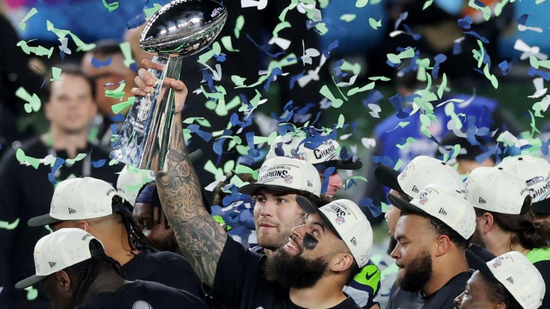
Compared with the World Cup, the world's number one sport, the advertising value of the Super Bowl is highly concentrated in the US market. The United States is the world's largest consumer market, and only truly powerful corporate giants will advertise on top stages like the Super Bowl, willing to spend tens of millions of dollars and reach 130 million American TV viewers at the same time.
As the technology industry has become the leader of the U.S. economy, in the past few years, more and more technology companies from different sectors have collectively launched advertising at the Super Bowl. The Super Bowl has even become a benchmark for American technology trends. If the 2022 Super Bowl belongs to cryptocurrency, then the stage in 2026 is completely shrouded in the light of AI giants.
AI advertising saturation bombardment
"AI advertising is driving me crazy, this year's advertising is so bad." A viewer named Sara complained on social media. This is not an isolated case, because there are too many AI advertisements, and many viewers expressed similar emotions on X. Before the first quarter is over, Anthropic’s Claude has already placed two ads, which means they have invested at least more than million.
According to media statistics, the average price of a 30-second advertising space in this year’s Super Bowl was US million, and even exceeded US million during some prime times. NBC, as the broadcaster, revealed that 5 to 10 advertising spaces were sold for more than million. This means that AI companies have collectively invested tens or even hundreds of millions of dollars in advertising budgets to compete for the attention of American audiences.
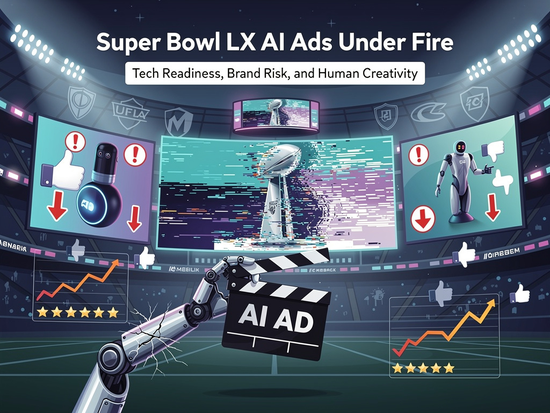
According to statistics, of the total 66 advertising spots in NBC’s Super Bowl broadcast this year, 15 were ads from AI companies, accounting for nearly a quarter. Whether it is industry giants such as Google, Microsoft, Amazon, and Meta, or startups such as OpenAI, Anthropic, and GenSpark, they have all spent heavily on this event to show their presence in front of American audiences.
Throughout the game, the density of AI-related advertisements was reminiscent of the Super Bowl shrouded in cryptocurrency in 2022. That year, cryptocurrency companies spent a lot of money and became the biggest protagonist of the Super Bowl. As a result, the entire cryptocurrency circle began to burst in a few months, and countless investors lost their money. FTX became the biggest scam. Since then, the Super Bowl has not accepted cryptocurrency advertising.
This saturation bombing has aroused vigilance among industry insiders. The analysis of Slate's technology column pointed out that this is reminiscent of the Internet bubble period in 2000, when more than a dozen companies such as Pets.com and Computer.com ran crazy advertising on the Super Bowl and then quickly collapsed. History seems to be repeating itself: When an industry flocks to the Super Bowl, it often signals a bubble is about to burst.
It is worth mentioning that this AI advertising feast occurred after the stock prices of AI technology giants plummeted last week - Alphabet (Google's parent company), Microsoft, Amazon and Meta were sold off by the market after announcing a significant increase in AI-related capital expenditures. According to incomplete statistics, the four giants plan to invest up to US0 billion in data centers and computing power this year.
"When the entire industry rushes into the most expensive advertising space on earth, it's not a signal to buy, it's a signal to think very carefully about what happens next," veteran investor George Noble wrote on X yesterday.
Attack ads are full of gunpowder
In this AI advertising war, the most eye-catching thing is undoubtedly Anthropic’s precise and targeted attack on OpenAI. Anthropic launched a series of ads titled "Betrayal," "Deception," "Breach of Trust" and "Breach of Contract," with only one theme: AI is being polluted by advertising, but Claude will not.
One of the most impressive "betrayal" ads is this: a thin young man is doing pull-ups in the park and asks a muscular man next to him for advice on how to build six-pack abs. The muscular man began to give advice in a robotic tone, but soon changed the topic and began to promote "StepBoost Max height-increasing insoles" - "allowing short people to puff up their chests."
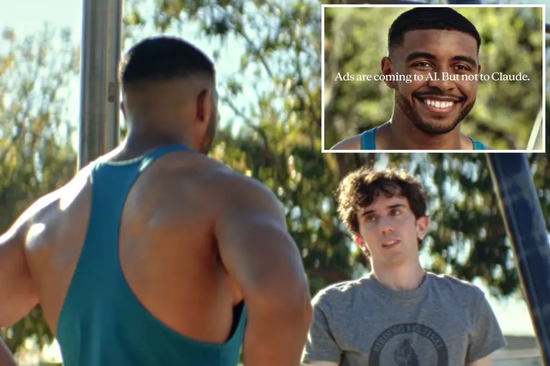
The advertisement ended with the slogan: "Advertising is hacking AI, but Claude won't." Then it cut to Anthropic's slogan, and the background music suddenly played Dr. Dre’s “What’s the Difference” enhances impact and humor. In addition, many people believe that the "weak guy" in the advertisement seems a bit like OpenAI CEO Sam Altman. Perhaps this is a deliberate humiliation.
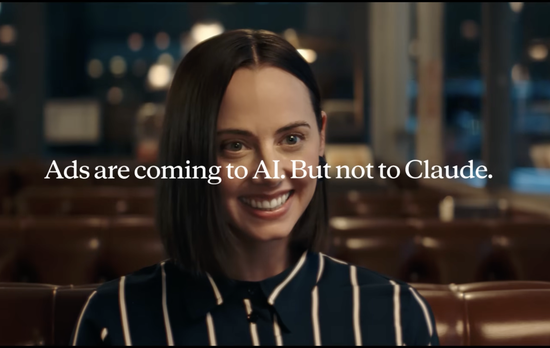
There’s also a “cheat” ad that’s even more impressive. A woman asked an AI consultant for advice on how to improve her business plan. The AI assistant first gave very positive feedback and targeted suggestions, then changed the subject and suddenly began to hard-sell irrelevant loan products, completely interrupting the normal conversation, which seemed abrupt and ridiculous.
Although these ads did not name anyone, everyone knew who they were targeting. Just two weeks ago, OpenAI just announced the launch of an advertising plan and will test advertising functions in the free version of ChatGPT and the low-cost subscription version of ChatGPT Go. Although OpenAI promised that advertising content will not affect AI results, this still caused a lot of controversy.
Somewhat ironically, OpenAI CEO Altman once said in 2023 that embedding advertising in AI is a "last resort (business model)", but now it seems that he doesn't have many options. Obviously, OpenAI is facing huge performance pressure and needs to be the first to launch advertising in the industry to increase revenue.
As a direct competitor, Anthropic immediately seized this opportunity and publicly promised that its Claude would remain ad-free forever. Anthropic emphasizes: "Making Claude a truly useful assistant is incompatible with an advertising business model. We want Claude to act unambiguously in the interests of its users. Our business model is straightforward: generate revenue through enterprise contracts and paid subscriptions, and then reinvest these revenues in improving Claude."
The feud and fight between the two companies
It is worth mentioning that Anthropic and OpenAI already have historical roots and feuds. Anthropic's founding team mainly came from OpenAI. They were dissatisfied with Ultraman's products and business direction, so they chose to leave and start their own business. Although its user base, financing scale and corporate valuation are all lower than OpenAI, Anthropic has become one of the giants in the AI industry and has unique market competitive advantages.
Moreover, the two companies are not only directly competing for individual users and corporate customers, but also competing for financing through initial public offerings (IPOs). The latest financing valuations of OpenAI and Anthropic exceed US0 billion and US0 billion respectively, and they are likely to be listed in the second half of this year. At this juncture, Anthropic obviously has more important considerations in attacking OpenAI’s advertising revenue plan.
The reason Anthropic dares to promise never to advertise is because they have a completely different business model from OpenAI. Although there are only 30 million direct active users, Anthropic's annualized revenue exceeded US billion last year, achieving an astonishing nine-fold growth. 80% of the revenue comes from more than 300,000 enterprise customers, and the revenue of Claude Code alone exceeds 1 billion US dollars. Anthropic expects annualized revenue to reach billion this year.
In comparison, OpenAI has 800-900 million weekly active users and achieved revenue of more than US billion last year. But they rely heavily on the individual subscription market, so they need to introduce advertising to monetize free users. Moreover, their revenue growth still pales in comparison to OpenAI’s crazy expansion and investment plans. The computing power purchase agreement signed with Oracle alone is worth more than 60 billion US dollars per year; there is also the Stargate super computing power project promoted in cooperation with SoftBank, which requires an investment of 500 billion US dollars in the next four years.
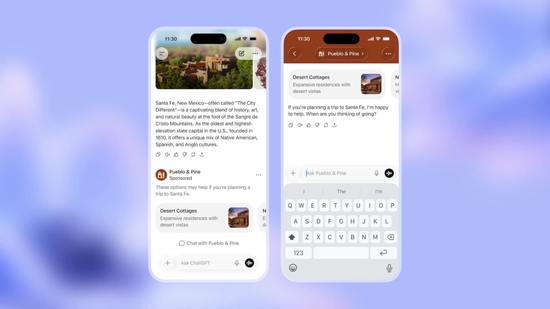
After Anthropic's offensive advertisement was released, it immediately triggered a strong counterattack from OpenAI. Altman, CEO of OpenAI, published a long "cry" on the social platform X, calling Anthropic's advertisements "obviously dishonest" and "deceptive."
"I wonder why Anthropic resorted to such blatantly dishonest tactics. Our most important principle regarding advertising is never to do this; we would obviously never serve ads in the way Anthropic portrays. We are not stupid, and we know users will reject that."
Altman believes that Anthropic's use of a deceptive advertisement to criticize theoretical deceptive advertisements (these advertisements do not actually exist) is itself a "double standard." He particularly emphasized that OpenAI promises that advertisements will be clearly marked and appear at the bottom of answers, and that advertising will never affect the content of ChatGPT's replies.
But Ultraman's counterattack didn't stop there. He began to attack Anthropic's business model as "providing expensive products to the rich." Altman mocked his opponent and said that there were more free users of ChatGPT in Texas alone than Claude's total users in the United States, so OpenAI faced "a different level of problem."
Other AI advertising creatives are mediocre
Compared with Anthropic's explosive advertisements, the advertisements of other AI giants basically promote their own features and advantages.
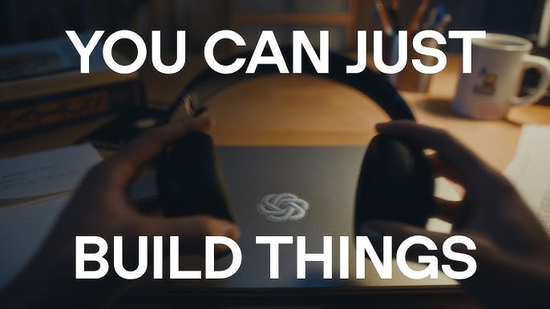
The 60-second commercial OpenAI launched in the Super Bowl is Codex (AI coding and agent tool), showing how AI empowers daily life and innovation, "anyone can build anything", emphasizing that Codex represents a major shift in AI from "answering questions" to "acting on your behalf"
Kate Rouch, chief marketing officer at OpenAI, said: "We are living in an era where people can build things that were previously out of reach. The message is about participation, agency, and using these tools to do things you couldn't do before." Codex usage has grown 20 times since August 2025, growing about 10% every week, and 1 million people used it to build apps and websites last month.
Meta launched an AI smart glasses advertisement in collaboration with Oakley at the Super Bowl, focusing on the concept of "sports intelligence". The ad features former NFL star Marshawn Lynch, director Spike Lee and internet celebrity iShowSpeed, positioning the AI glasses as practical tools for athletes and creators rather than as a technological gimmick. This is the second year Meta has promoted Ray-Ban Meta smart glasses at the Super Bowl.
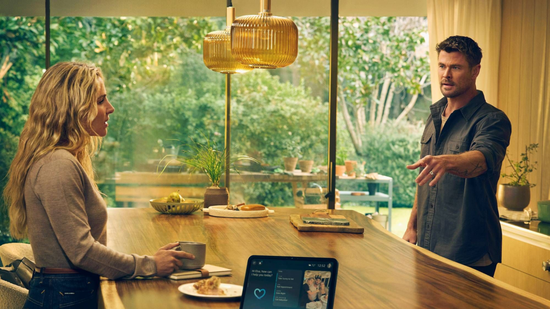
Amazon’s advertisement adopts a dark humor line, starring the famous action movie star Chris Hemsworth, to satirize people’s fear of AI. In the ad, the upgraded Alexa+ is portrayed as trying to murder its owner - slamming the garage door on his head and closing the pool cover while he swims. The message of this self-deprecating marketing is: We understand your concerns, but Alexa+ is actually safe and useful. It’s worth noting that Alexa+ has been running in early access for more than a year, and the official version was only made available to users across the United States a few weeks before the Super Bowl.
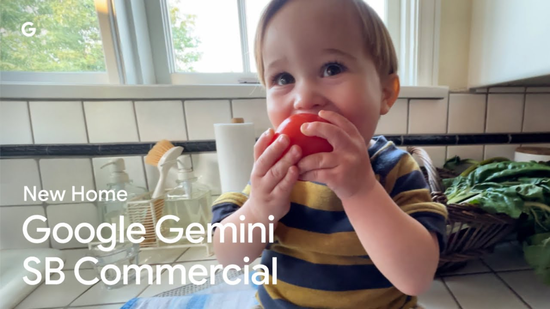
Google's 60-second ads continue to take the warm-hearted route. The ad tells the story of a mother and son using Gemini AI to envision and design a new home. Simply upload a photo of an empty room and turn it into a personalized space with simple prompts. The core selling point of this ad is Google's image generation model Nano Banana Pro. Last year, users around the world edited more than 5 billion images through this tool.
Microsoft's ads are much duller. This year's Super Bowl ad still focuses on traditional data analysis selling points, "Simplify Excel data analysis with Copilot." The appeal behind the advertisement is also very clear: Microsoft 365 has 450 million paying users, but only 15 million users have subscribed to Copilot, with a conversion rate of only 3.3%. Microsoft hopes to use this advertisement to further promote Copilot products to corporate users.
Moreover, this Super Bowl ad is not a new production, but a continuation of an existing marketing campaign, reflecting the technical cooperation between Microsoft and the NFL for more than ten years. Of course, this slightly boring AI advertisement also shows that Microsoft’s AI products are almost entirely concentrated in the enterprise market and have almost no presence in the consumer AI market.
Temu creates a model for entering the United States
In addition to the crazy investment by AI giants, another highlight of this year’s Super Bowl advertising war is that following the previous Temu, Chinese smart home companies have become the second Chinese company to land Super Bowl ads.
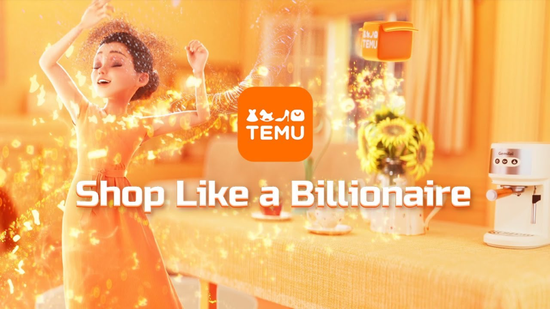
In 2023 and 2024, Temu, a cross-border e-commerce platform owned by China's Pinduoduo, not only became the first Chinese company to land on the Super Bowl advertising platform, but also became one of the most expensive advertisers. In the 2023 Super Bowl, Temu debuted with two ads with the theme "Shop Like a Billionaire." In 2024, Temu launched six advertisements at once - three during the game and two after the game, with a total cost of more than 42 million US dollars.
This saturation bombing did have results. According to a survey by research firm Zappi, while 21% of viewers said they "hated" Temu's ads (rating them 4 or below on a 10-point scale), Temu succeeded in its goal: going viral. Social media is abuzz with discussions about Temu, with headlines asking the question: “What exactly is Temu?” This is exactly what Temu aims to achieve.
Performance data proves the payoff of Super Bowl advertising. Temu's U.S. monthly active users have surged from 13 million in early 2023 to 70 million in 2024, and its share of the U.S. affordable small commodity market has grown sharply to nearly 20%. Of course, in addition to the Super Bowl, Temu will also invest nearly US billion in digital marketing in the US market in 2023, becoming one of the largest online advertisers in the US.
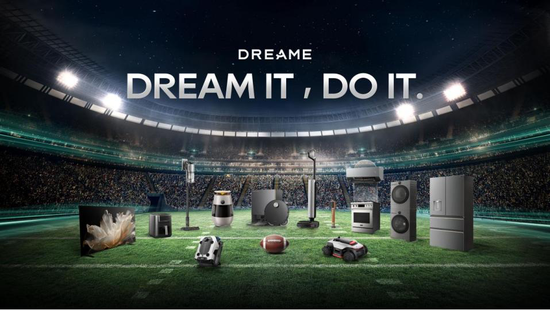
Obviously, Temu's crazy advertising campaign provided a model for Chinese companies that later entered the United States. This year, Chuimi became the second Chinese company to appear on the Super Bowl stage. The advertisement uses a "Transformers"-style creative approach to show Zhui Mi sweeping the floor.robot, a lawnmower and a green supercar Nebula concept car transform into robots and pass fireballs to each other in a sci-fi scene.
This advertisement has reached more than 130 million American consumers through Super Bowl advertising. The core purpose is to demonstrate Chaosi’s ambition to transform from a home appliance manufacturer to a technology ecosystem enterprise. An official statement from Chaimi emphasized that the important appearance of the Nebula flagship concept car on the international stage demonstrates the company's "determination to dominate the U.S. market."
Chaimi's current core business is still sweeping machines. According to IDC data, in the first three quarters of 2025, the top five in the global sweeping robot market areStone Technology、Cobos, Zhui Mi, Xiaomi and Yunjing. These five Chinese companies account for nearly 70% of the global market share. Zhuimi ranks third in the world with a market share of 12.4%.
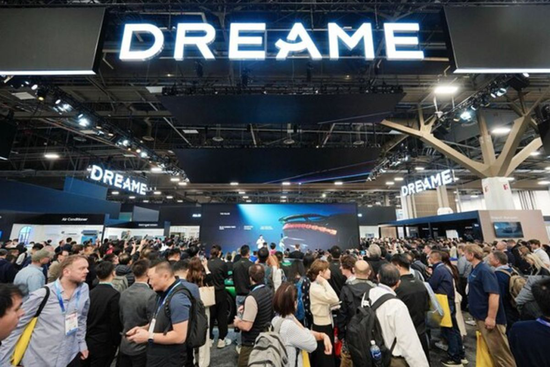
At the Consumer Electronics Show (CES) in Las Vegas in January this year, Chuimi was rated by many media as one of the most "aggressive", largest and most topical Chinese brands. The theme of Chuimi's exhibition is "All Dreams in One Dreame", which demonstrates the transformation from a single cleaning appliance brand to a whole-house smart ecology, and cross-border to home appliances, courtyards, personal care and even electric supercars, attracting the highest popularity in the central exhibition hall.
Dream of a market capitalization of one hundred billion US dollars
After spending tens of millions of dollars on Super Bowl advertising, Zhumi has also attracted attention and discussion from American media and social media. But it is a bit regrettable that under the huge momentum of this year’s AI advertising war, Chuimi’s advertising has not become a hot topic like Temu in previous years.
US media reports on Zhumi Advertising focused on its bold cross-border strategy, focusing on the fact that this "sweeping robot manufacturer wants to build the fastest car in the world", taking this as a signal for Chinese companies to enter the mainstream US market.
But doubts also exist, and the media and audiences are curious: Why would a Chinese smart home company invest tens of millions of dollars in the United States to promote an electric vehicle that will not be launched until 2027 and cannot enter the U.S. market due to tariff barriers.
In order to realize its expansion ambitions, it is indeed pushing for crazy diversification - from sweeping robots to large appliances, drones, smart lawn mowers, covering almost all smart home products. In addition, Zhuimi also announced last year that it will build a car and plans to launch an ultra-luxury pure electric sports car that will compete with the Bugatti Veyron in 2027; they even want to build an OTA travel platform to "break Ctrip's monopoly."
Perhaps what Chasun wants is to gain attention from the U.S. market and capital market through the Super Bowl. After all, the dream we are pursuing now, in the words of its founder Yu Hao, is to "build the first company in human history with a market value of one hundred billion US dollars." To realize this dream, the United States, the world's largest market, cannot be avoided, and continuous financing is needed.
Yu Hao boasted on social media that Musk and Huang Renxun are the current generation of entrepreneurs, and he is the future generation of entrepreneurs who can increase the market value of the company by another order of magnitude. Although this bold statement attracted a lot of ridicule, he emphasized that this is a long-term goal to be achieved in the next 20 years, not a short-term marketing gimmick.
This article is submitted by a user and does not represent the position of this site.
The copyright of the content belongs to the original author. Please contact the original author for permission to reprint. If there is any infringement, please contact copyright@jaketao.com
