
At this week's OpenAI annual developer conference (DevDay), OpenAI CEO Sam Altman did something rarely seen among current US tech industry leaders: he actually answered reporters' questions.
“I know it’s tempting to write a bubble story,” Altman told me, accompanied by his senior staff. “In fact, I think many areas of AI are indeed a bit bubble-like right now.”
In Silicon Valley, the debate over whether AI companies are overvalued is intensifying.
Skeptics, privately—and now some publicly—question whether the rapid rise in the market value of AI technology companies is partly due to so-called "financial engineering."
In other words, people are worried that these companies are overvalued.
Altman said he expects investors to make some wrong judgments, and some foolish startups may easily obtain large sums of money.
But he told me that for OpenAI, "some real things are indeed happening here."
However, not everyone is convinced.
Recently, the Bank of England, the International Monetary Fund (IMF), and JPMorgan Chase CEO Jamie Dimon have all warned of an AI bubble. In an interview with the BBC, Dimon stated, "Most people should have a greater sense of uncertainty."
In this place considered a global technology hub, doubts are rising.
At a panel discussion this week at the Computer History Museum in Silicon Valley, early AI entrepreneur Jerry Kaplan told a packed audience that he has experienced four bubbles.
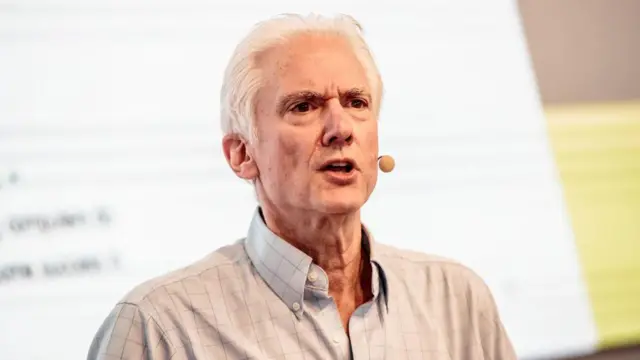

Image source,Getty Images
He is particularly worried because the current market size far exceeds that of the dot-com bubble, and the losses could be even more severe.
“When the bubble bursts, things will be very bad, and it won’t just be people in the AI field who will be affected,” he said.
"It could drag down the overall economy."
However, Professor Anat Admati of Stanford University's Graduate School of Business—a place that has nurtured many tech entrepreneurs—says that despite the many models that have tried to predict bubbles in the past, they have often been in vain.
“It is very difficult to pinpoint the exact timing of a bubble,” Professor Anat told me, “and you can’t be sure if you’re in it before it bursts.”
However, much of the data remains worrying.
This year, 80% of the astonishing gains in the US stock market came from AI-related companies; according to market research firm Gartner, global spending on AI is projected to reach a staggering .5 trillion (approximately £1.1 trillion) by the end of 2025.
Intricate transaction networks
Since OpenAI launched ChatGPT in 2022, bringing AI into the mainstream consumer market, it has become the core of a complex trading network that has attracted a series of attention.
For example, last month it reached a deal worth up to 0 billion with chipmaker Nvidia, which is currently the world's most valuable publicly traded company.
This deal expands Nvidia's investment in Altman Inc., with OpenAI expected to build data centers powered by Nvidia's high-end chips.
Then on Monday, OpenAI announced plans to purchase billions of dollars worth of AI development equipment from AMD, a rival of Nvidia. This deal could make OpenAI one of AMD's major shareholders.
Please remember that although OpenAI is a private company, it was recently valued at 0 billion.
In addition, tech giant Microsoft is also a major investor in OpenAI, while cloud computing giant Oracle has signed a 0 billion cooperation agreement with OpenAI.
OpenAI's "Stargate" project in Abilene, Texas, funded by Oracle and Japanese conglomerate SoftBank, was announced at the White House during President Trump's first week in office and has been expanding every few months.
As for Nvidia, it also holds shares in the AI startup CoreWeave, which is a supplier of some of OpenAI's large infrastructure.
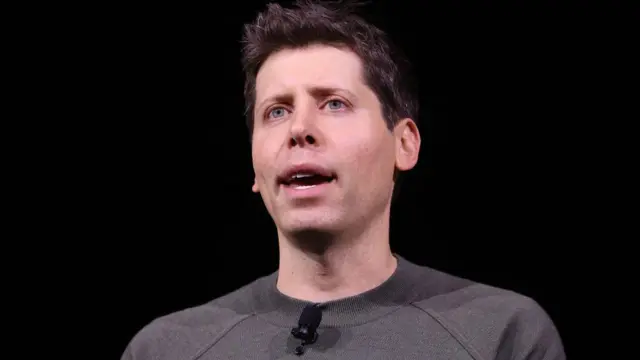
Image source,Getty Images
As these increasingly complex financing arrangements become more common, Silicon Valley experts point out that they may be blurring the outside world's understanding of the true need for AI.
Some people are outspoken in their criticism of these deals, calling them “revolving financing” or even “supplier financing”—that is, companies investing in or lending to their own customers so that they can continue to buy products.
“Yes, these investment loans are unprecedented,” Altman told me on Monday.
But he added, "The company's revenue growth is unprecedented."
OpenAI's revenue has indeed grown rapidly, but it is still not profitable.
The people I spoke with kept mentioning Nortel—the Canadian telecommunications equipment provider that had borrowed heavily to help clients complete transactions, thereby artificially inflating demand for its products, which is not a good sign.
As for Nvidia CEO Jensen Huang, he defended his deal with OpenAI in an interview with CNBC on Monday, saying that OpenAI did not need to use his investment funds to purchase Nvidia's technology.
“They can use this money to do whatever they want,” Huang said.
“This is not exclusive. Our main goal is to support them, help them grow—and let the whole ecosystem grow together.”
Signs of a bubble
Kaplan stated that he sees several clear signs that the AI industry—and consequently the economy as a whole—may be at risk.
He pointed out that during periods of market overheating, companies often announce major plans and product blueprints, but in reality, they do not have sufficient funds.
Meanwhile, retail investors are also rushing to invest in the startup boom.
This week’s surge in AMD’s stock price may reflect investors trying to get a piece of the ChatGPT wealth – all while physical infrastructure is being expanded to meet the seemingly endless demands of AI development.
“We are creating a man-made ecological disaster: building massive data centers in remote areas such as deserts, where these facilities will gradually decay and release harmful substances into the environment, and no one will take responsibility because the builders and investors have long since left,” Kaplan said.
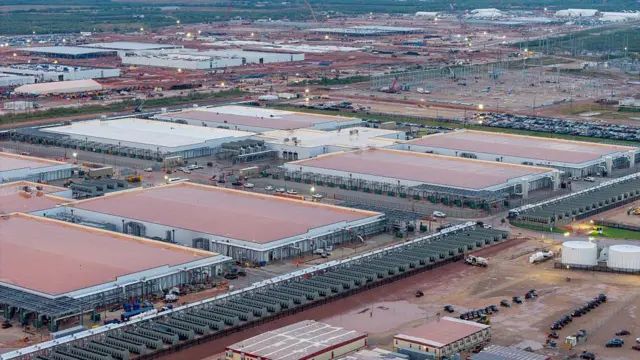
Image source,Getty Images
Even if we are indeed in a bubble, Silicon Valley hopes that the money it invests now will not be wasted.
“What reassures me is that the Internet was born from the ashes of past over-investment in telecommunications infrastructure,” said Jeff Boudier, product developer of the AI community platform Hugging Face.
“Over-investing in AI infrastructure now could indeed pose financial risks,” he said.
"But this will also lead to many new products and experiences, including those we haven't even imagined yet."
Many people still believe that AI can change society.
The question is whether the funds available to support the industry's leading companies in achieving their ambitions are drying up.
“Huida looks like the last lender or investor,” said Rihard Jarc, founder of the AI analytics newsletter UncoverAlpha.
"Who else has the capacity to invest another 0 billion in another company?"
This article is a user submission and does not represent the views of this website.
The copyright of this content belongs to the original author. Please contact the original author for authorization before reprinting. For any copyright infringement issues, please contact copyright@jaketao.com
