


Sony Interactive Entertainment's entertainment division is considering a structural overhaul of how it distributes its key products globally. Recent information suggests the Japanese company plans to limit the release of single-player narrative-driven games (referred to as single-player games) on its consoles, thereby restricting their availability on PC. This move aims to reassess the commercial impact of the PC port and strengthen the brand's hardware ecosystem.
The strategic plan was formulated at a time of generational change, with the PlayStation 6 already in the company's development vision. The aim was to transform the company's flagship cinematic titles, now a hallmark of its studios, into a key tool for driving console sales. Games that rely on large online communities to maintain profitability through live-service releases will continue to launch simultaneously or within shorter desktop windows, with a hybrid approach maintained only if an expanded user base is critical to the game's success.
One of the most striking examples of this new guideline is the highly anticipated Marvel's Wolverine, developed by Insomniac Games and slated for release in September 2026. So far, there has been no indication of a PC version, breaking with the pattern of recent years of porting console games to other platforms. The absence of PC advertising reinforces the argument that Sony is seeking to protect its most valuable intellectual property, ensuring that the PlayStation 5 and its successors are the only places where these experiences can be used at launch.
The difference between service games and narrative games
The differentiation between game genres has become fundamental to this Japanese giant's business logic. Games like Helldivers 2 have proven that simultaneous releases on PC and consoles can generate record revenue and create vibrant communities, sustaining the product long-term. For this product, hardware exclusivity became an obstacle, limiting the potential for monetization through microtransactions and sustained engagement. Therefore, when the company's goal was to maximize daily active players, it had to open the door to PC.
In contrast, traditional single-player adventure games, such as the God of War and Horizon Zero Dawn series, operate on a different logic. Their value lies in immersion, technical quality, and narrative—factors that have historically driven consumers to purchase proprietary hardware. Internal analysis suggests that even years later, Sony may weaken the appeal of its consoles by bringing these games to PC without reaping the financial rewards of losing full exclusivity. It's believed that revenue from Steam or the Epic Games Store wouldn't compensate for the potential loss in console and accessory sales.
Performance data from previous ports like *The Last of Us Part I* and *Spider-Man Remake* shows that while they were profitable, they didn't achieve the explosive sales figures seen on consoles. Furthermore, the cost and time required to optimize these games for various PC hardware configurations ultimately diverted resources that could have been used for exclusive new products. By focusing on the console's fixed hardware, studios can extract maximum performance with greater efficiency.
Technology Optimization and the Future of Hardware
The architecture of the PlayStation consoles allowed developers to utilize specific features such as high-speed SSDs and haptic feedback from the DualSense controller to create highly optimized experiences. Focusing development on a single platform eliminated the technical challenges of ensuring compatibility with thousands of graphics card and processor combinations on the PC market. This resulted in a more refined final product with fewer technical issues at launch, which is precisely why modern gaming PC versions have repeatedly faced criticism.
As the PlayStation 6's lifespan nears its end, the need to showcase its graphical capabilities and technological innovations becomes increasingly urgent. Games developed internally by PlayStation Studios, such as upcoming works by Naughty Dog and Santa Monica Studio, should serve as a technological showcase for the new hardware. Exclusivity ensures that these titles are associated solely with the PlayStation brand, reinforcing the console's identity as the home of premium, high-fidelity visual experiences.
Projects like Ghost of Tsushima's spiritual successor, Ghost of the Sheep's Hoof, have yet to be confirmed for other platforms, consistent with this hardware-centric strategy. Sony is expected to use these releases to retain its installed base, providing players with compelling arguments to migrate to new platforms immediately upon release, rather than having them play the same games on PC in the near future.
Impact on the market and competition
Sony's stance contrasts sharply with its competitors, who have adopted a more platform-agnostic approach, seeking to bring their games to as many screens as possible. By doubling down on exclusivity, the Japanese company reaffirms its belief in the traditional console generation model that exclusive content is the primary driver of hardware sales. This strategy, which has played a decisive role in past generations, appears to be the preferred path to address the challenges of an increasingly fragmented market.
For consumers who enjoy gaming on PC, this news presents a difficult choice: either invest in a console to experience Sony's compelling stories, or wait indefinitely with no guarantee that these games will be available on their preferred platform. The company believes the quality of its exclusive titles is sufficient to convert some of these players into PlayStation users, thereby expanding its direct user base and increasing recurring revenue through subscription services and peripheral sales.
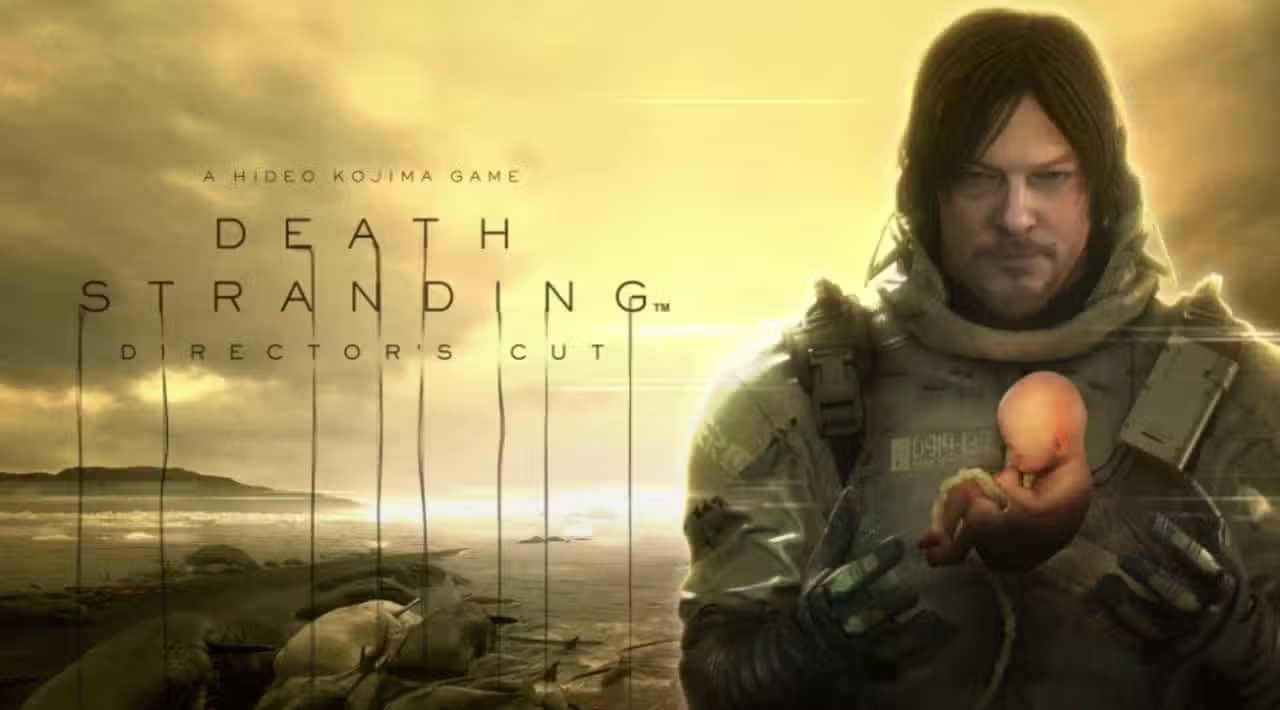
Even with external partnerships, such as the collaboration with Kojima Productions for Death Stranding 2: Beach, Sony attempts to maintain control over how and when its games reach other platforms. The trend is that, unless there are specific contractual exceptions, the PlayStation Studios seal will increasingly become synonymous with absolute console exclusivity, while PC will become a secondary area focused solely on multiplayer experiences and ongoing support.
This article is a user submission and does not represent the views of this website.
The copyright of this content belongs to the original author. Please contact the original author for authorization before reprinting. For any copyright infringement issues, please contact copyright@jaketao.com
