
According to the official announcement from Wildlight Entertainment, the MOBA shooting game "Highguard" announced that it will cease service on March 12: "Despite the enthusiasm and efforts of the development team, this game was ultimately unable to establish a stable player base sufficient to support the operation of the game in the long term, so a difficult decision was made."
After seeing this news, some people's first reaction was that only 37 days had passed from the launch to March 4. In other words, by March 12, Highgurad's total operating time was 45 days.
But the reaction of other people may be: What is "Highguard"?


Just now, at the Game Awards ceremony held in the theater next door, "Highguard" was released as a major game. It goes without saying that it has such weight and status. At that time, perhaps the most appropriate behavior was to raise a toast to celebrate.
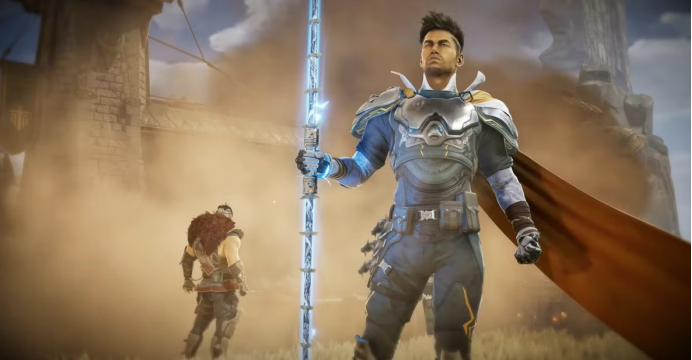
However, players have not yet recovered from the shock of TGA using such a game as its main axis. After they recovered, negative public opinions such as doubts and disapproval about this game "Highguard" dominated the mainstream.
Audiences questioned why the last game unveiled at The Game Awards was a multiplayer hero shooter. The "stitching" gameplay that combines PvP loot shooting, base construction and artifact competition has also caused some discussion, controversy and ridicule.
Some people have even compared it to the infamous Sony game "Star Attack" - the latter, as an ongoing game valued by Sony, ended up with dismal sales and was forced to be removed from the shelves less than two weeks after its release.
However, people were not optimistic about it. At that time, people may not have thought of the ending of "Highguard" today. At least not long after its debut at the TGA awards ceremony, the game was officially launched on January 27 in less than a month. It was just a mule or a horse to come out and run around.

The result, of course, was a mule.
After the official launch, although Steam initially reached a peak of nearly 100,000 people online at the same time, more than half of the number of players quickly lost in just 6 hours. The current player evaluation has dropped to "mostly negative", and netizens joked about the miserable start performance: "It will really become "Star Strike 2.0"."
Negative reviews on Steam are mainly focused on boring game content and technical issues. All aspects of the game experience are far below players' expectations. As the expectation of TGA 2025's major game, it has also become a powerful weapon used by some players to "boomerang" bad reviews.
Faced with an overwhelming wave of negative reviews, the official has released an update roadmap for the next year, promising to bring season updates every month. The content will cover core content such as new maps, new heroes, weapons, gameplay changes, etc., in an attempt to restore confidence.
However, this long-term plan seemed to fail to quell criticism from the community. Soon, players questioned the longevity of the game. After all, the lessons of "Star Agent" are not far away.

Then, there is this service suspension announcement.
According to the official final announcement, more than 2 million players have entered the world of "Highguard" since the game was released. However, this accumulated number is obviously not very effective - for example, on March 2, the number of people online at the same time on Steam for the game was only 277. Coupled with the previous negative news surrounding the game such as "Tencent divestment", the final difficult decision is only a matter of time.
Looking back and calculating the time, 45 days is only 3.2 "Xingming Agent". Looking back on this tragedy of one and a half months, what exactly happened, and who should be held responsible for it?

At the end of January, “Highguard” was officially launched. The game attracted a large number of players in the early days, but then its popularity quickly declined. Less than three weeks later, Wildlight laid off most of its staff — a bolt from the blue for the studio's small but tight-knit team of senior developers, many of whom love working together and have built a number of hit games in the past.

In 2021, a small group of people working at game developer Respawn, a subsidiary of Electronic Arts, decided to quit their jobs and start an independent company. Two years ago, they released Apex Legends, a game that became a huge success and generated over billion in revenue.
However, as sales soared, some creatives involved in the game's development became dissatisfied, feeling they did not receive enough benefit from the windfall.
So when they founded Wildlight Entertainment, the members decided to take a different approach, and one of their plans was to set up a profit-sharing structure so that if the studio was wildly successful again, everyone would benefit from it—a very attractive structure that ultimately helped the team attract many of their former Respawn colleagues to the new company.
Then, with the team attracting huge funding from Tencent thanks to its industry veteran credentials, Wildlight began recruiting staff and planning its first game. The founders made it clear that they wanted to "make a multiplayer shooter," but they wanted to avoid the competitive "battle royale" market.
So they turned to Rust, a survival game in which players raid enemy bases and build their own. They began building levels and designing game mechanics to create a survival-focused shooter.

Two years into development, the team realized there were problems with the design, in part because too much freedom conflicted with their goal of high competitiveness, and because the game was too large. However, some of the content still has merit. In particular, the base raid mechanic in survival games seems worth retaining.
In January 2024, the team turned to what would become Highguard, a "raid shooter" game that streamlined many of the survival elements into a faster-paced, more competitive game.
In the year leading up to the game's launch, Wildlight conducted extensive testing of Highguard with both internal employees and external players. They worked closely with members of Tencent's Tianmei Studio, although they tried to keep it secret.
Bloomberg stated that CEO Welch refused to disclose the game’s investors to reporters, and Tencent employees involved in development did not appear on the list of game production personnel.
One of the big problems the game faced at the time was that feedback from testers was mostly positive, but there may have been some blind spots in the testing process. For example, Highguard is a difficult game to get started, and it is more fun when using voice chat to communicate with other players. Former Wildlight employees said that after testing with the microphone turned off, the gaming experience dropped significantly.

Moreover, due to the lack of endorsement from IP and previous games, the outside world has no understanding of this game at all, which makes it difficult to collect feedback from a wider range of players from the player community level.
Several other successful multiplayer games have followed this path, such as Battlefield 6, but every time Wildlight pitched the idea, executives vetoed it. They wanted to replicate the success of Apex Legends, which was kept under wraps until its official release.
Bloomberg’s report mainly pointed out some opaque issues from the early days of the game and even the studio to the gameplay level. If these issues were only internal secrets at that time, with the exposure of the TGA awards ceremony, everything was put on the table.

But many people are questioning why it can occupy a major position in the Game Awards - and now, "Highguard" sales are dismal, and some people believe that Jeff had too high expectations for the game, which was one of the reasons for its failure.

In the context of these events, various theories began to circulate on social networks, and some even believed that TGA manager Jeff should be responsible for the subsequent failure of "Highguard". He has previously publicly expressed interest in the project and presented it on his show, which has even led some users to speculate that he may have a personal financial stake in Highguard's exposure.
Such speculation was publicly refuted by Larian Publishing Director Douse: "To blame someone just because he played a trailer on a TV show is childish and ridiculous and shows a lack of understanding of the industry."
But in the seven weeks between the announcement in December last year and the official release on January 26 this year, Wildlight Studio remained silent, even as players speculated online whether the game would be delayed or canceled.
Wildlight employees have been asked to stay away from social media, where negative comments are accumulating. Wildlight's leadership hopes the game will speak for itself.
People who have worked at Wildlight say that the studio's work environment is healthy, collaborative, and transparent, and that many people enjoy working there—at least until the last two months. Since then, they say, morale has been low and there has been no clear answer on what success will look like, leading to complaints from employees that they might be going in the wrong direction.
Some mines that had been laid long ago also detonated at this time. For example, reviewers criticized many elements of the game, including overly large maps and cumbersome mechanics (such as mining), many of which were carried over from earlier versions of Highguard.
Critics also noted that the game was overly complex and would be less fun if played with strangers without the microphone turned on—a problem Wildlight could have identified earlier by letting players play the game before its official release.
In the days that followed, the biggest issue facing Highguard became player retention—a challenge that Wildlight's management emphasized to employees multiple times. A week after the game launched, they lost about 90% of their players, which is a shocking number. Although the hastily launched 5v5 mode was well received, it did not save players.
Still, the folks at Wildlight believe they have enough money to continue developing the game and ironing out the issues for at least the next few months. But on February 11, just two weeks after the game's release, the company held an all-hands meeting and announced that the studio was running out of money and that most of the 100-person team would be laid off. They will stay on for another week and then receive a modest severance package.

According to people familiar with the matter, at the meeting, management stated that Tencent had withdrawn its investment in the studio. Although the company doesn't say it explicitly, employees generally believe that their financial support depends on meeting certain metrics, such as user retention, and they are far from meeting those metrics.
Several former Wildlight developers used the word "arrogance" when asked what they thought the problem was -- the company's leadership believed they could replicate past successes with Apex Legends, no matter how much the gaming industry had changed since then. After all, they created one of the biggest games of the last decade.


The game attracted a large number of players on its first day by relying on people's curiosity, but it has never been able to escape the reputation crisis mentioned before, nor can it escape its ever-present mediocrity. Players are leaving.
Game File reports that Chinese gaming giant Tencent has secretly invested in the game - considering Tencent has publicly invested in many overseas studios and projects, and holds stakes in Larian Studios, FromSoftware, Epic Games and Ubisoft. Typically, these are minority stakes.
However, it is reported that in the "Highgurad" project, Tianmei is the main investor, which seems very strange. In late February, Tencent withdrew its investment in the project, depriving it of the financial support it needed to reverse its decline.
This view is also shared by former employees. Former employee Josh Sobel publicly blamed the "culprits" on YouTube players and content creators. According to him, the problem isn't the quality of the game, but "massive hate propaganda and disinformation."
Reviews were positive ahead of the official release, but after the trailer was released there was "chaos": memes such as "Concord 2 or Titanfall 3 are to die for" appeared, along with more than 14,000 negative reviews from players who had played the game for less than an hour.
Sobel believes consumers put "a lot of effort" into disparaging the game, which scared away potential viewers.
Of course, as for the credibility of the overly sensational view that "game creators ruined a supposedly great game", it may not be that important, because this sensational description even set off another wave of discussion - perhaps more than 277 people participated.

After all, in the final analysis, players will naturally vote with their feet whether the game is fun or not and whether there is an upper limit.
On the other hand, apart from the TGA awards as a major game, "Highguard" itself lacks the overwhelming publicity and financial support of other major manufacturers. The upper limit of the game is foreseeable, not to mention that solid gameplay and eye-catching content are the basis for winning over players. "Highguard" does not occupy any of these.
Gamingbolt quoted Wildlight's former senior level designer Alex Graner as saying that the failure of "Highguard" mainly lies in the complexity of the gameplay and the high requirements for movement and shooting: 3v3 mode will always be the most "hardcore" of all modes, whether it is a battle royale or a goal-oriented mode - this is true for any mode.
"It requires a high degree of team communication and collaboration, with little room for leisure and entertainment. I think this is the main reason why many players are disappointed with Highguard."
Graner said that he actually never liked the competitive design of "Highguard". "You don't go out of your way to create a game that fails, but unfortunately, it happens. Throughout development, we really focused too much on competitiveness, and that's always one of my biggest worries as a player."
PCgamer said: "Whenever a game like Highguard fails, we can't help but wonder why the industry continues to pursue large-scale online service games that ultimately fail miserably.
"The obvious answer is that sometimes you do make something like Hellraiser 2, make hundreds of millions of dollars, and everyone thinks you're smart. But obviously the stakes are high, and one of the reasons the stakes are so high is a reality that has vexed executives and investors in today's games industry for years: At least in the case of online-as-a-service games, past success doesn't seem to be a good predictor of future success. Not at all."
Benholzer, a columnist for The Daily Iowan, said: "Highguard is destined to fail. The game is a failure with mediocre design, poor pacing and lack of aesthetics. The game experience is filled with long and meaningless waiting, and the oversized map lacks interactive goals, resulting in the core gameplay being reduced to boring 'shopping' and unboxing."
"The gunplay is lackluster, and the hero skills and base defense mechanisms seem to have no strategic depth in the face of the crude map design. It cannot be compared with successful competing games such as "Valorant" or "Overwatch."
In addition to technical and design failures, the arrogant attitude of developers is also a problem.
For example, many people think that the graphics of the "Highguard" game are as boring as "tofu color matching" and the character design has no personality. Wildlight Entertainment refuses to listen to player feedback, instead packaging product failures as "artistic creations" and blaming consumers. This lack of quality control and disregard for market logic is the result of its own fault.

It is an exaggeration to say that compared to the "infamous" "Star Attack", "Highguard" may not even be remembered as "infamous" by players because of its all-round mediocrity. "
Some foreign netizens also praised Tencent's decision: To some extent, the most interesting part of this story is that Tencent now has enough raw data about the free game/online service model. They can observe your game for two weeks and then say: "No, this is hopeless, everyone quits."
Arrogance is a big blight in the gaming industry and they should have worked harder to avoid this failure. Tencent’s decision to exit and potentially tie subsequent work to user retention is the right one.
Perhaps in the future, whenever the media and self-media take stock of games that died shortly after being launched, they will never forget "Highguard" which died suddenly in 45 days.
Unfortunately, as a group of elites who should know best about shooting games, they were involved in the final death struggle of the multiplayer online hero shooting track. In this cycle, capital and the market require that every new game must carry the ambition of "the next national service game" - this is not the first joke, and it will not be the last.
This article is submitted by a user and does not represent the position of this site.
The copyright of the content belongs to the original author. Please contact the original author for permission to reprint. If there is any infringement, please contact copyright@jaketao.com
