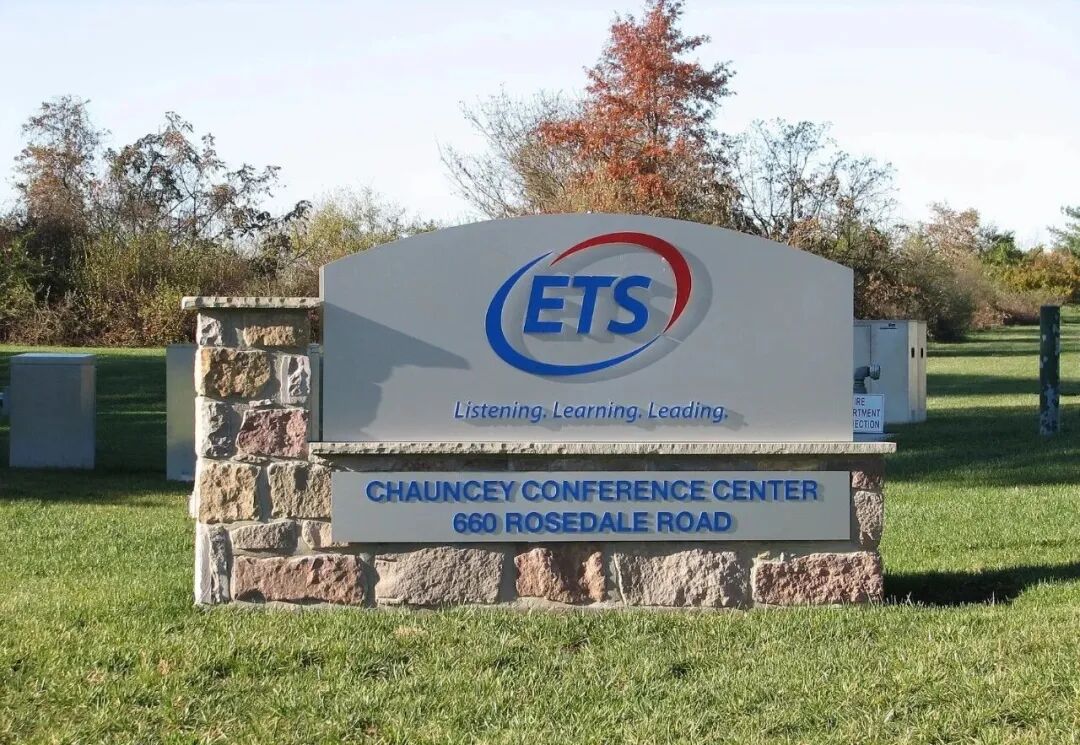

The Wall Street Journal reported thatETS's proposed sale of the GRE and TOEFL exams for approximately 0 million has sent shivers down the spines of countless families with children studying abroad. Why the sudden sale? Who will acquire them? What impact will this have on Chinese students studying in China? This article has all you need to know.

In January 2026, the study abroad community was abuzz with a major piece of news.
ETS, the long-established organization that operates the GRE and TOEFL exams, is in talks to sell these two businesses for approximately 0 million, and may also bring in investors. Simply put, this long-time companion that has accompanied generations of international students across the globe may be changing hands.

(Image source: The Wall Street Journal)
Why did it come to this? In short, the pressure is too great. The most direct factor is the decline in the number of test takers. The number of GRE test takers plummeted from 510,000 in 2017 to approximately 200,000 in 2024, a drop of more than half. Although ETS shortened the test time from nearly four hours to under two hours and provided faster score releases, it couldn't stem the decline in popularity. TOEFL is also struggling, losing significant market share in recent years to competitors like Duolingo, which offers at-home testing at more affordable prices.

(Comparison of TOEFL, IELTS, and Duolingo test fees, test duration, test format, and delivery services. Image source: NetEase Data)
A deeper reason is that ETS itself is tightening its belt. According to its financial report, although its annual revenue is .09 billion, its expenses are also as high as .07 billion, with a balance sheet approaching 0 million. Since 2020, ETS has laid off at least seven rounds of staff, and planned to lay off more than 700 people last November. To make matters worse, it just lost its SAT test management contract, which brings in approximately 0 million in revenue annually. At the same time, US policies are tightening, limiting the ability of universities to recruit international students, resulting in a significant drop in the number of international students going to the US for graduate studies. This directly affects the demand for GRE and TOEFL, and even IDP, one of the organizers of IELTS, has lowered its profit forecast. In 2026, the official IELTS registration fee was updated to 1990 yuan from 2170 yuan in 2023, putting pressure on the entire language testing market.

(Image source: IELTS official WeChat account)
So the question arises: who might take over TOEFL? Currently rumored potential buyers include Singapore's Hillhouse Capital and the US private equity firm Nexus Capital. Reports suggest the negotiations might not involve a direct sale of the test, but rather a capital partnership to help ETS expand into new markets such as the Middle East and India. It's worth noting that Nexus Capital just acquired another college entrance exam, the ACT, last year. If it also acquires TOEFL, its influence in the college entrance exam field will be virtually unshakeable.
So, how much will this affect Chinese students studying abroad? The answer is definitely yes. The TOEFL is more than just an exam; it's the first ticket for many to go abroad. Chinese test takers account for approximately 40% of all TOEFL test takers globally, and more than 260,000 Chinese students go to the US to study each year.Contributed nearly 0 million in revenue,ETSThis change will undoubtedly affect the hearts of most Chinese students studying in the United States. Precisely because of this, any change in the control or operational model of the exams will inevitably bring many risks.
Currently, there are three risks that warrant attention.
Firstly, itPublic credibility may be affected.The reformed TOEFL has been explicitly stated by Oxford and Cambridge to no longer accept it, and its global reputation will be damaged if the test is perceived to "favor" certain candidates in the future.
SecondThe accreditation of American universities is questionable.If TOEFL is labeled as "foreign-controlled," some US universities may reconsider or even abandon its use. However, it's important to note that the finalization of this deal remains highly uncertain. Foreign media outlets have already reported that the Committee on Foreign Investment in the United States (CFIUS) is likely to review the transaction. The US government is highly sensitive to educational data security, especially since TOEFL possesses a vast amount of personal information and ability profiles of international test-takers, potentially serving as a gateway for AI talent competition. Therefore, CFIUS is highly likely to reject acquisition plans involving foreign capital, meaning the control and operating model of the test may not fundamentally change in the short term.
ThirdExam fees and services may change in the future.If profit-driven capital takes over, it's possible that prices will be raised or the number of exam sessions will be increased in order to generate returns.
In the face of these uncertainties, here are a few practical suggestions:First, we must take the exam seriously.As long as your target school doesn't explicitly say it doesn't recognize TOEFL scores, they remain an important stepping stone.Secondly, it's best to have a backup plan.This allows you to simultaneously access information about other widely accepted exams such as Duolingo, thus mitigating risk; thirdly, and most importantly...The focus should be on developing language skills themselves, rather than spending too much energy on new question types.No matter how the exam rules change, genuine academic English proficiency will always be a solid foundation for studying abroad.
Currently, discussions about the sale of TOEFL certificates remain rumors.At this stage, no action has been taken. International students should not panic or let rumors disrupt their plans. The only constant way to cope with ever-changing situations is to improve their own capabilities.
This article is a user submission and does not represent the views of this website.
The copyright of this content belongs to the original author. Please contact the original author for authorization before reprinting. For any copyright infringement issues, please contact copyright@jaketao.com
