
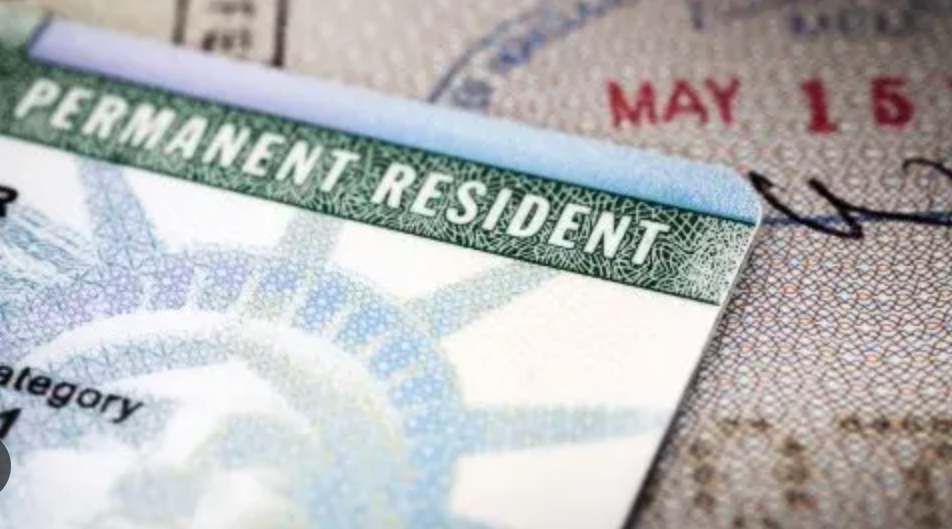

However, recent adjustments to U.S. immigration policy are subtly altering this long-established perception. Several immigration lawyers point out that the U.S. government's approach to monitoring immigrant status is shifting, and this change is not only targeting undocumented immigrants, but also permanent residents who already hold legal status.
In particular, certain types of green card holders are being identified as a new group requiring close scrutiny.
Why have "this type of green card" become a regulatory focus?
Of all green card categories, the one currently receiving the most attention is Conditional Green Card。
This type of green card is most common for marriage-based immigration applicants. Upon initial approval, the applicant only receives temporary permanent resident status valid for two years. They must then submit an application to prove the genuine and ongoing nature of the marital relationship in order to convert it to a ten-year permanent green card.

In the past, this transition process relied mainly on document review, but the immigration law community has observed a change in that law enforcement agencies are strengthening on-site verification of authenticity.
Some conditional green card holders have been asked to undergo more rigorous investigations, including: whether they are still living with the spouse they applied for, whether their actual residential address is consistent, whether their marital relationship is still genuine, and whether there are any issues with information from the time their status was obtained.
Immigration lawyers have revealed that in some cases, immigration officials have even gone directly to registered addresses to conduct verifications. While this practice is not new, it is becoming increasingly frequent.
The scope of review has been expanded, and green cards are no longer a "one-time approval" process.
More notably, the new round of regulations is not only targeting those applying for status, but also extends to permanent residents who have held green cards for many years.
In the process of renewing credit cards or applying for citizenship, the immigration authorities are strengthening background checks, including re-examining materials and eligibility criteria submitted in earlier years. Some immigration documents that applicants completed many years ago may now be subject to re-verification.
Legal experts point out that the U.S. immigration system is shifting from "admission screening" to "continuous compliance screening," meaning that the stability of one's status increasingly depends on the current status, rather than just whether it was approved in the past.
A restriction has begun to affect a large number of Chinese families.
At the same time, an implemented policy change is having a more direct and real impact on the Chinese community.
According to the latest regulations, some Small Business Administration (SBA) loan programs are no longer open to green card holders. For many new immigrant families who rely on small businesses to establish themselves in the United States, this means a significant tightening of financing channels.

For a long time, Chinese immigrants have made up a significant proportion of businesses in the food service, retail, e-commerce, logistics, and service industries, and SBA loans are often a crucial source of funding for startups. After the policy adjustment, some business owners who have not yet obtained citizenship will find it difficult to access previously available federal support programs.
This change is seen by many lawyers as a sign that the impact of immigration policy has extended from the status level to the economic level.The new regulations will beIt will officially take effect on March 1.
Entry and exit supervision has been upgraded, and travel records are being tracked in the long term.
Another important measure under development is a biometric entry and exit system for all non-U.S. citizens.
Under the new regulations, permanent residents, including green card holders, will be required to register their biometric information upon departure from and entry into the United States. The government will be able to continuously record an individual's length of stay abroad and frequency of entry and exit through the system.

Because U.S. law requires permanent residents to maintain their principal residence in the United States, those who reside overseas for extended periods or frequently travel abroad for extended periods will be more easily identified by the system and subject to scrutiny in the future.
This change has a particularly noticeable impact on Chinese families who frequently travel between China and the United States.
This article is a user submission and does not represent the views of this website.
The copyright of this content belongs to the original author. Please contact the original author for authorization before reprinting. For any copyright infringement issues, please contact copyright@jaketao.com
