
Recently, in addition to the heated discussions in the industry caused by the situation in the Middle East, a new inspection operation by U.S. Customs has also caused great anxiety among countless overseas sellers.
U.S. Customs and Border Protection (CBP) recently launched a special document review operation codenamed "5H," with Los Angeles and Long Beach ports as the hardest-hit areas. Thousands of Chinese containers have been detained due to issues with declaration documents, and some containers are at risk of being forcibly returned.
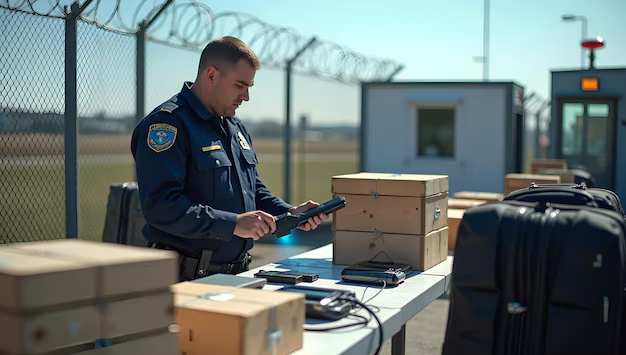

Following this, U.S. Customs and Border Protection recently officially clarified:Starting March 1, 2026, in accordance with Section 19 USC1484(a)(2)(b) of the U.S. Customs Act, efforts to combat "customs clearance via bond" will be comprehensively intensified.The enforcement standards established in the preliminary inspection have been formalized into new regulations.

5H Inspection Core Analysis
Many sellers only know that inspections are coming, but they don't understand the core logic of 5H inspections.
5H stands for Entry Processing HOLD, which is a formal detention order issued by the U.S. Customs AMS/ACE system. It is completely different from the traditional model of opening containers for inspection. The core of this operation is "document review first, then on-site inspection".
According to the seller, the operation was led entirely by the newly established Fast Doc Review department of U.S. Customs.

Unlike previous inspections, this 5H inspection adopted a full-chain, penetrating verification approach.
This means that the entire trade chain, from domestic factory purchase contracts and shipping invoices to the qualifications and compliance of US importers and end-sales records, is subject to review.
Customs will first conduct multiple rounds of cross-checking of invoices, packing lists, manifests, bond qualification documents, etc., to confirm whether the product description, consignee information, and declared value are compliant. Goods that pass the document review can be released normally.
If any discrepancies are found during the review, the process will proceed directly to opening the package for inspection. Ultimately, penalties such as tax payment, goods destruction, or forced return will be imposed based on the inspection results.

According to sources at the ports, the 5H inspection rate at the ports of Los Angeles and Long Beach has soared to over 30%, tripling compared to previous levels, covering a number of popular cross-border product categories such as furniture, electronics, clothing, and outdoor supplies.
The core trigger for verification
Feedback from this wave of detained and returned goods indicates that two gray-area practices are highly likely to trigger risks:
One is the declaration of goods with extremely low value.
Many freight forwarders use "low-price customs clearance" and "tax and inspection included" as gimmicks to attract goods, but deliberately underreport the value of goods during customs clearance to avoid taxes;
Under the comparison of customs big data, a significant deviation between the declared price and the average market price will directly trigger an early warning. Once it is verified that it is a malicious underreporting, the goods will be returned without any room for negotiation.
Secondly, there was the illegal practice of "using Bond for customs clearance".
Previously, under the "double clearance and tax included" model, freight forwarders used purchased bonds and shared tax numbers to clear customs for different cargo owners in order to lower prices, resulting in a serious discrepancy between the actual cargo owner's identity and the IOR information.
Bonds are promoted by the U.S. Federal Maritime Commission and are essentially a guarantee agreement signed by the importer, the guarantee company, and U.S. Customs. They can be understood as a kind of security deposit that the U.S. importer needs to purchase from U.S. Customs.
The new regulations, which came into effect on March 1, reiterate that under the U.S. Customs law framework, the only legally responsible party for customs clearance is the actual cargo owner.
After the new regulations are implemented, such goods will be directly refused entry if they are inspected, and will incur high return shipping costs and demurrage fees, which is completely consistent with the enforcement principle of "direct rejection of unqualified documents with no opportunity to supplement documents" in the 5H inspection.

In addition, behaviors such as vague and general product declarations, inconsistent information in multiple orders, new importers without customs clearance records, incomplete qualifications for sensitive categories, and mixed shipments of infringing goods are all highly likely to be included in the high-risk profile.
It is important to note that no public written notification will be sent for 5H inspections. Sellers must proactively contact the customs broker or freight forwarder, or verify in the ACE system whether the relevant inspection code has appeared.
You can also check the status of your container through the U.S. Customs website or the port system to avoid undue delays and further losses.
Sellers who encountered scams suffered significant losses.
Once a container is marked for 5H inspection, the losses the seller will suffer are far more than just returning the goods.
First, there are the fixed costs that keep rolling over. Once the container enters the inspection process, port storage fees, container demurrage fees, inspection and handling fees, agency service fees, etc., begin to accumulate on a daily basis, with daily costs ranging from hundreds to thousands of US dollars.

More fatal than direct financial losses is the complete loss of sales opportunities.
March is a crucial period for stocking up on seasonal cross-border products. For e-commerce sellers, stockouts caused by goods being stuck in ports can directly lead to a precipitous drop in listing rankings, and even cause the store's weight to drop to zero overnight.
Even more seriously, once customs determines that there has been malicious false declaration, not only will the goods be forcibly returned, but the corresponding importer's qualifications will also be marked as high-risk, and every subsequent shipment with that label will face strict inspection by customs.
In fact, customs verification of the authenticity of trade is never a sudden action, but a routine supervision by customs authorities in various countries.
According to a recent Bloomberg report,There is a discrepancy between Chinese export data to the US and actual US customs records.A gap of up to 2 billion;

This means that up to a quarter of the goods shipped from China to the United States last year may have bypassed the U.S. tariff control system in some way;
Among them, "double clearance and tax included" is the most representative, which precisely explains why U.S. Customs launched this strict inspection.
This is similar to the crackdown on customs fraud in China in 2025, which aims to safeguard the bottom line of trade traceability. The United States' strict investigation into customs clearance using false qualifications and false declarations is essentially the same.
Industry insiders generally predict that the first quarter of 2026 will be the "crisis season" for freight forwarders operating on the US route. Those "three-no players" who attract customers by offering "zero declaration" and "ultra-low prices" will be the first to be eliminated in this compliance storm.
In the end, only those who adhere to compliance principles will survive and thrive in overseas markets.
This article is a user submission and does not represent the views of this website.
The copyright of this content belongs to the original author. Please contact the original author for authorization before reprinting. For any copyright infringement issues, please contact copyright@jaketao.com
